In Memoriam
Updated: Jun 7
It's half-past midnight on the 7th of June, 2026, the eve of my grandmother's twelfth death anniversary. Her death had shocked us as she departed for the ether despite being in the pink of health and us being in the Netherlands, almost eight-thousand kilometers away from my Himalayan hometown. Twelve days back, on the 27th of May, 2026, I lost my grandfather while I was in absentia and spending my summer break at his home in Gangtok, the home where my first memories took shape. It was the same apartment where my grandmother traveled to the other world and twelve years back, we rushed from Amsterdam to Gangtok. Fast-forward to the present, we rushed from Gangtok to Coimbatore, where we currently live. The irony of spending the night of 27th in my grandparents' home felt surreal as I looked over at their photos placed in the living room. Locking it on the early our 28th felt different and mind numbing as I closed the door and meticulously locked everything the way my grandfather handled it. Leaving Gangtok that morning felt different, particularly, the road trip to Bagdogra airport. I had traveled this route multiple times, even before I became cognitively conscious and continue to do so every summer break. The absence of both my grandparents brought in a void which I find unexplainable.

I had lived in Gangtok as a kid, had studied my kindergarten there, then moved to Singapore and then have spent most of my life in Coimbatore, almost three-thousand kilometers away from my hometown. I always long for Gangtok as I consider it to be my comfort zone or a place to mentally sink into during times of duress. The city feels like my grandparents' home. I get recognized as Bhattacharyya sir's granddaughter in our locality. My coping mechanism for any adversity has been to mentally lock myself in the moment when I was huddled between my grandparents while sipping tea in front of the room heater at our home in Gangtok.
For a good chunk of my life, I was raised by my grandparents right from my birth to my early stages of childhood when my mom was battling cancer and my dad lived in Europe. I think until moving to Coimbatore, I was more close with my grandparents and processing my grandmother's loss was extremely hard. After that my grandfather lived for seven to eight months in Kolkata and spent the remaining year with us. Whenever he came, I used to sleep with him and I grew up listening to his stories of growing up in Sapekhati, a village near the Assam, Arunachal Pradesh and Nagaland border during the pre-independence era. It felt like a different timeline, particularly stories of an American airman crashing in a farm next to theirs during the second world war. He along with his brothers learnt English from the American soldiers stationed at that front during the second world war. As a kid, these stories felt more enchanting and intriguing but as I grew up and by the time, I was in middle school, I realized, he had led a very interesting life indeed.
He was the second-youngest in his family of five brothers and an elder sister and had gone to Kolkata to study art. My great-grandfather Mr. Rakesh Chandra Bhattacharyya was also an interesting person as he gave up priesthood to pursue business and helped set-up tea-estates in upper Assam and then took to agriculture on a massive swath of land in Sapekhati. His legacy unfortunately doesn't remain due to the ULFA uprising of the 1980s. Despite hailing from a priestly lineage, my grandfather wasn't the most religious person, he taught me about my ancestry, the origin of Kanyakubj Brahmins and where I can find my ancestral record dating back almost five hundred years. My grandfather studied both Indian and western art in college and even worked in a Swedish art studio in Kolkata and had the rare chance of seeing the famed director of classic Indian cinema, Satyajit Ray in close quarters before he had become famous. It was in Kolkata, that he started his enormous book collection in the 1950s, including rare books such as the first edition of Heinrich Harrer's, "Seven Years in Tibet".
The year was 1959 when he moved to Sikkim, during the reign of Sir Tashi Namgyal, the second last king of the Namgyal dynasty in Sikkim, a time when Sikkim was not a part of India. He was brought to Sikkim on the behalf of his uncle, Mr. Srish Bhattacharyya who was the financial advisor to the king and had been sent from Delhi by the Indian government. On a wintry morning in February 1959, he was officially an employee of the Government of Sikkim and was deployed in the village of Temi in the remote mountains and tasked with developing a school there. I've been to Temi a dozen times by now, it's a lovely place and has gained recognition for its tea-garden. When my grandfather was deployed there, he said that they had to walk from Singtam, a town south of Gangtok, had to cross a rope-bridge to cross the river Teesta which divides Sikkim into two halves and then trek till Temi. I was astonished when I first heard this as these days, motorable roads exist everywhere and these places have a significant influx of tourists. I later happened to read in his diary that electricity hadn't arrived yet in rural Sikkim back then. His diary had vivid descriptions of his life with his roommate, Mr. Mahesh Mathur who later became a senior government officer and also of all the people he met, the books he read and the sketches he made occasionally. He used to often talk about climbing Mt. Bhaley Dhunga, a twelve-thousand foot mountain which has a motorable road today but wasn't completely accessible earlier.
His second deployment was in Pelling in 1970, where he was a faculty at the Teacher's Training Institute for teachers. In the meanwhile, he got married to my grandmother who hailed from Shillong, but he brought her to Sikkim after parts of rural Sikkim received electricity connection. I imagine they must have had a good life as my grandmother was trained in Hindustani classical music while my grandfather was an artist. Classical music, Himalayan scenery and art fuse very well together. Both of them had a taste for classical music and they used to collect HMV records, particularly of D.V Paluskar and Pandit Ravi Shankar, the famed Sitarist who even inspired the Beatles. They were both readers and collectors of cassettes and records and these collections are non-exhaustive. In a futile attempt to make a catalogue of all the books he owned, I found myself dumbstruck and exhausted as he had books on any subject I could conceive of ranging from music to art to literature to history to medicine to encyclopedias to technology to spirituality. My father often says that the only person who actually read his entire PhD thesis on adhesive bonding in polymeric composites was my grandfather.
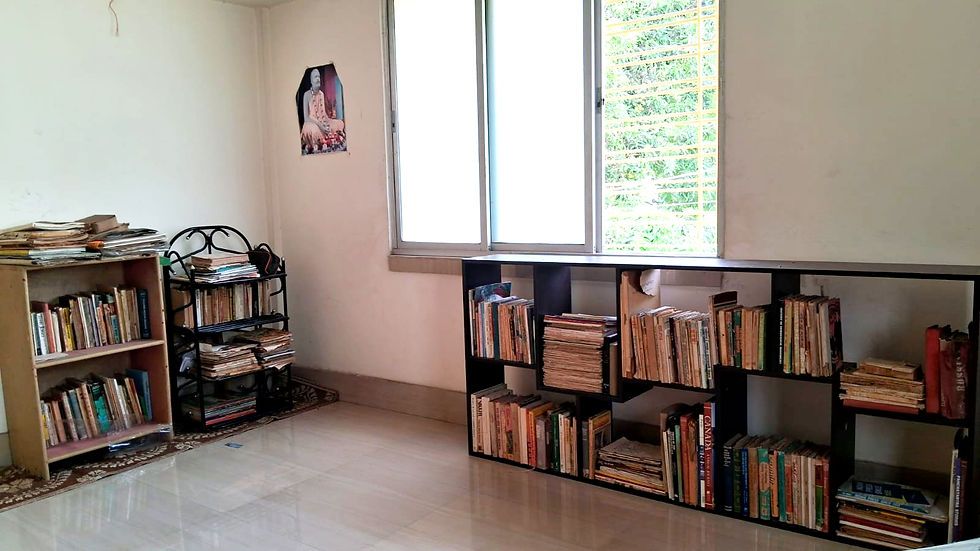
His well read demeanour probably had shaped him for his illustrious career in the education sector and also the Editor-in-Chief of Sikkim Express, the leading newspaper of Sikkim. He was posted in the textbook division in the Department of Education, Government of Sikkim in Gangtok after Sikkim joined India in 1975. He later became the Joint-Director of the textbook division and was instrumental in giving official status to the Limboo language in Sikkim, for which he is honoured and and as told by some teachers that his name is remembered even today as textbooks on Limboo mention his name in the beginning. He didn't talk about his work much, rather he was a man of few words but he wrote a lot. I read his essays on education and on several directive principals on education which as a retired government officer from Sikkim told me had played a very pivotal role in shaping Sikkim's school education system as one of the best in the country.
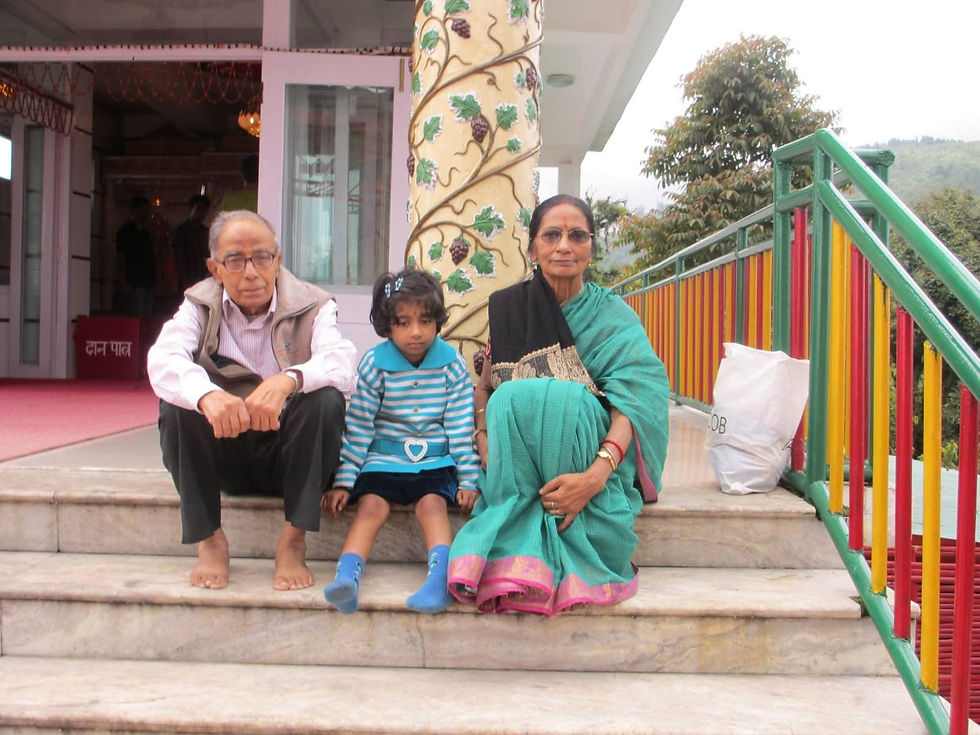
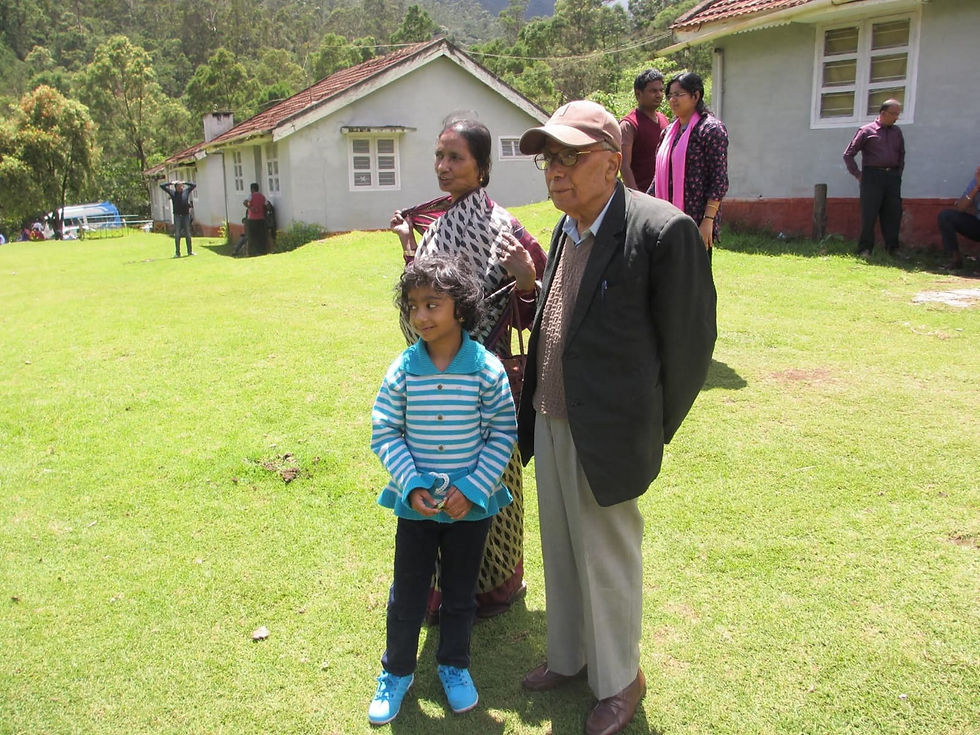
Some memories with my grandfather during one of our summer trips to Sikkim and another to Uttarakhand
At home, he spoke about maps which sparked my interest in cartography. I remember once, when I was in seventh grade, he asked me on a weekend to take my laptop and show him the country of Vanuatu. I had never heard of this place until then and he was visibly shocked as he had noticed me peering into the world map so many times. He had once said, about a couple of years ago to show him images of the archipelago of Tristan da Cunha. I was dumbstruck and felt embarrassed at myself to have claimed to have memorized the world map. He told me it's an interesting place and told me to visit this remote island once in my lifetime. What shocked me was he knew it was a dependency of the British crown off the coast of South Africa and he knew all this without being an internet user and had gathered his knowledge from books. Living with him felt like living with an encyclopedia and its very rarely that I've come across somebody with such a wide array of knowledge despite growing up in academic circles. Living in Sikkim, he was a member of the Namgyal Institute of Tibetology, one of the few institutes in India dedicated to Tibetan history and culture. He always spoke about Sikkim being the land he had adopted and loved more than the lands he had hailed from.
He was a very well-dressed man and perhaps my regular dress-code of wearing sneakers with jeans, a hoodie and a t-shirt totally undermines his legacy but I have taken after him on my clean freak habits. Even on outings, until the past few years, he always wore coats instead of jackets. He had different ways of tying his neck-tie and always wore a Seiko wrist-watch. He was so particular about his suits, his double-breasted formal coats, his dress-shirts and his formal shoes. As he aged, he continued to look after himself and shifted from a coat to sweater vests and a relaxed half-jacket or a fleece jacket but wore formal pants all the same. Earlier, at home, he would always wear a dressing gown over his night-suit but after coming to stay with us in Coimbatore, given the weather, he switched to T-shirts. He stayed well-dressed no matter the circumstance and that's something I appreciate and admire. I reckon he always polished his penny loafers and that inspired me to polish my school shoes and maintain my sneakers.
Being raised by my grandparents, I acquired a lot of their traits, their way of speaking Bengali with an Assamese accent mixed with Nepali words and my love for black tea. They were connoisseurs of tea and that habit is there in me. They taught me to read, write and introduced me to my hobby, art. I'll miss all the discussions I had with my grandfather on western and Indian art or talking about early Himalayan explorations and on books by legendary mountaineers such as Eric Shipton. He was an artist by education but he asked me about my engineering subjects and even checked my question papers from semester exams. He felt happy that I had chosen mechanical engineering and had asked whether I wanted to go into industry or academia and research like my parents. He knew certain concepts which we were learning in manufacturing processes and it was another moment when I couldn't help but admire his knowledge. He had said I would be into aircrafts as I had taken my first flight with my grandparents when I was about two and half years old and I had run on the tarmac of Bagdogra airport. His intuition worked too well as I'm not into but rather obsessed and took to learning an entire language as my favourite aviators were Ukrainians.

He knew me and understood me like nobody did. Since he had seen me from my first moments on earth, he knew which foods would make me sick, which ailments hit me first when I fell sick and he could also tell how long each bout of sickness would last and I would be fine again. He used to drop me off at school when I was in kindergarten and both my grandparents had done a lot of heavy lifting parenting me while my mom recuperated from cancer. These memories will stay with me even if they are no longer in the physical form. Even recently, in the September of 2024, when my grandfather was just bedridden for a few weeks, I had stayed up to study for a C-programing test, a subject a detested and was terribly petrified of. I had crept back into bed after a long night and to my surprise, he was awake and stroked my back and reassured me. One of my luckiest things is that I get to study engineering by staying at home and therefore, I could spend time with him in his final months. He had given up talking for the past five months but he stayed awake despite being bedridden even at 3:30 AM, a regular time when I slept and then he chose to sleep. I'll miss the warmth and care which I got from him. Being an only grandchild, I was extremely close with them but I consider myself fortunate to have gotten to know them.
The feeling of penning this piece at a very unearthly hour while listening to Pandit Ravi Shankar's sitar feels nothing short of surreal. The void and the chasm will continue to exist but I've to honor the intellectual legacy of my grandparents and maybe their memories and intellectual prowess will gradually fill the void. I'm grateful to inherit my grandfather's massive and non-exhaustive book collection. People are mortal but their work and legacy remain and his memories will be etched in his bookshelves, paintings and in remembrance of his work towards the people of Sikkim.

This is so beautifully written dear Trishani. Your grandfather was an extraordinary man, and you are lucky to have shared the relationship with him that you did. To have spent the formative years of your life with your grandparents, and that in ethereal beauty of Sikkim. That's a gift from grace. May you always cherish your grandparents and the lessons you learnt from them. And may they smile at you from the heavens, their hands on your head, as you go on and build your own extra-ordinary life.
Much love,
Deepak